Corporate Europe Observatory

Exposing the power of corporate lobbying in the EU

A wake-up call for the Commission – lobbyists exploiting privileged access

  • Dansk
  • Nederlands
  • English
  • Français
  • Deutsch
  • Ελληνικά
  • Italiano
  • Portuguese
  • Español
  • Svenska
Printer-friendly versionSend by emailPDF version

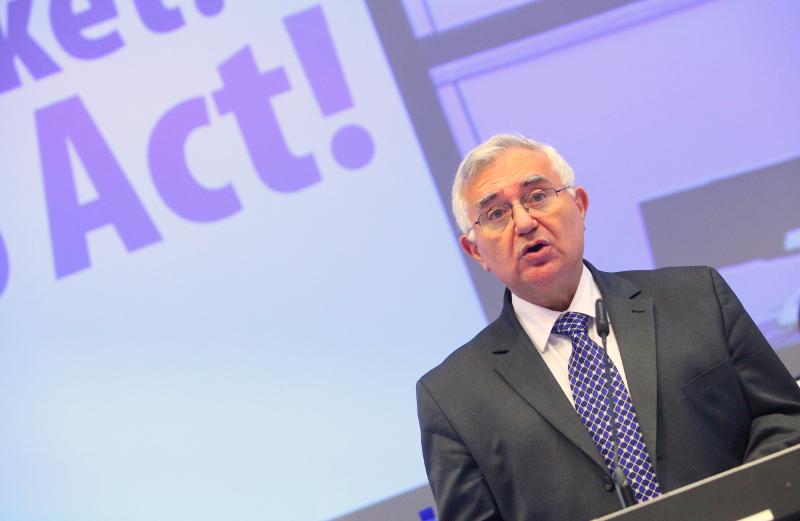
EU Commissioner for Health and Consumer Policy John Dalli’s resignation yesterday highlights the need for stronger measures to regulate EU lobbying to rule out the risk of privileged access and political corruption in EU decision-making.

Dalli’s resignation came about after a report by anti-fraud agency OLAF failed to clear him of corruption allegations. The case centers around Silvio Zammit, a Maltese businessman and politician from Dalli’s party who offered tobacco producer Swedish Match to use his access to Dalli to influence a revision of EU rules on tobacco products. OLAF’s report did not find conclusive evidence of the direct participation of Dalli but it did argue that he was “aware of these events”. Dalli denies this and claims his resignation is in order to be better able to contest the claims.

While there are many question marks around what exactly happened, there is little surprising in the circumstances around the case. The European Commission is the focus of intense lobbying and many business lobbyists benefit from easy access and close contacts. This opens the door to the potential for corruption.

The transparency and ethics reforms introduced in recent years have not been enough to prevent such situations from arising. This new scandal should be a wake-up call for the Commission to finally start treating these issues seriously. Only effective transparency and ethics rules can help discourage undue influence, including corruption.

Corporate Europe Observatory believes urgent action is needed in five areas:

  1. The Code of Conduct for Commissioners should be strengthened, with precise ethics rules to prevent Commissioners from finding themselves in situations that might result in undue influence. The current Code is far too abstract and full of loopholes to be effective.
  2. Industry’s privileged access to the Commission undermines the quality of EU decision-making and risks policy capture by commercial interests. The Commission should tackle privileged access and ensure that Commissioners defend the public interest against narrow commercial interests at all times.
  3. The Commission should now finally accept the need for an overhaul of the EU’s voluntary lobby transparency register. The register must become mandatory and its many loopholes must be fixed, to secure a comprehensive and reliable picture of who is lobbying, on whose behalf and with which budgets.
  4. The Commission should introduce pro-active transparency around the contacts between Commissioners and lobbyists, publishing lists of meetings, correspondence and telephone calls online. In the UK, government departments already publish lists of meetings with lobbyists, while Swedish ministers publish logs of their correspondence.
  5. Finally, the Dalli case raises questions about the screening of incoming EU Commissioners. The EUObserver reports that Dalli had previously faced accusations of corruption in Malta. EU Commissioners not only must behave ethically, they must be seen to behave ethically in the eyes of the public. Member States, the Commission and the European Parliament (which gives final approval to candidate-Commissioners) have a duty to ensure that Commissioners are able to guarantee the public’s trust.
Dalli’s resignation came about after a report by anti-fraud agency OLAF failed to clear him of corruption allegations. The case centers around Silvio Zammit, a Maltese businessman and politician from Dalli’s party who offered tobacco producer Swedish Match to use his access to Dalli to influence a revision of EU rules on tobacco products. OLAF’s report did not find conclusive evidence of the direct participation of Dalli but it did argue that he was “aware of these events”. Dalli denies this and claims his resignation is in order to be better able to contest the claims.While there are many question marks around what exactly happened, there is little surprising in the circumstances around the case. The European Commission is the focus of intense lobbying and many business lobbyists benefit from easy access and close contacts. This opens the door to the potential for corruption.The transparency and ethics reforms introduced in recent years have not been enough to prevent such situations from arising. This new scandal should be a wake-up call for the Commission to finally start treating these issues seriously. Only effective transparency and ethics rules can help discourage undue influence, including corruption.Corporate Europe Observatory believes urgent action is needed in five areas:The Code of Conduct for Commissioners should be strengthened, with precise ethics rules to prevent Commissioners from finding themselves in situations that might result in undue influence. The current Code is far too abstract and full of loopholes to be effective.Industry’s privileged access to the Commission undermines the quality of EU decision-making and risks policy capture by commercial interests. The Commission should tackle privileged access and ensure that Commissioners defend the public interest against narrow commercial interests at all times.The Commission should now finally accept the need for an overhaul of the EU’s voluntary lobby transparency register. The register must become mandatory and its many loopholes must be fixed, to secure a comprehensive and reliable picture of who is lobbying, on whose behalf and with which budgets.The Commission should introduce pro-active transparency around the contacts between Commissioners and lobbyists, publishing lists of meetings, correspondence and telephone calls online. In the UK, government departments already publish lists of meetings with lobbyists, while Swedish ministers publish logs of their correspondence.Finally, the Dalli case raises questions about the screening of incoming EU Commissioners. The EUObserver reports that Dalli had previously faced accusations of corruption in Malta. EU Commissioners not only must behave ethically, they must be seen to behave ethically in the eyes of the public. Member States, the Commission and the European Parliament (which gives final approval to candidate-Commissioners) have a duty to ensure that Commissioners are able to guarantee the public’s trust.
 

Comments

Submitted by Katherine Devli... (not verified) on

We could not agree more with the above. It is absolutely essential that powerful industrial lobbies are actively prevented from having an undue influence on policy-making. Indeed, since our inception, we have been calling (and continue to call) for a return to a reliance upon unbiased evidence (scientific and other), reported accurately and transparently, rather than what is currently an apparent 'policies-for-the-highest-bidder' system.

The ONLY way forward is true transparency. In this way, perhaps real change for good can be effected.

Best of luck with your endeavours.

Katherine Devlin
President
ECITA (EU) Ltd
(most assuredly NOT associated with either the Tobacco or Pharmaceutical industries, or their lobbies)

Submitted by Corporate Europ... (not verified) on

It’s good to see that the Electronic Cigarette Industry Trade Association, thinks that it is “absolutely essential that powerful industrial lobbies are actively prevented from having an undue influence on policy-making” and that with regards to EU lobbying “the ONLY way forward is true transparency”. Why then didn’t ECITA register in the EU Transparency Register, which has been open to lobbyists since June 2008?

Perhaps ECITA would like to provide some more details about its own lobbying activities. We know that on 20 June 2012, ECITA lobbied the European Commission on the ongoing revision of the Tobacco Products Directive. Was ECITA happy with the reception they received?

Perhaps not, given the strong charge against John Dalli that ECITA wrote on its blog on 16 October, just a few hours after Dalli’s resignation, stressing at some length that it is “not the first time John Dalli has been accused of illegal and thoroughly unsavoury behaviour”.

Is ECITA celebrating the likely delay to the Tobacco Products Directive?

Submitted by JIm Murray (not verified) on

This is very strange. Lots of people look for work and are paid on the basis of their abiity to "network" with decision makers in Brussels. What is so different about this case? We need more specifics.

Similar entries

Commission gives a warm welcome to unregistered lobbyists: Dalli not alone in ignoring transparency

Ex-Commissioner John Dalli knowingly met with lobbyists who were not registered in the European Commission and European Parliament’s Transparency Register. Lobbyists who choose to hide from the public who they're lobbying for, on what subject, or how much money they’re spending to influence public policy. Lobbyists who work in the shadows. Shocking? Yes, but it is a very common practice in the Commission to meet with unregistered lobbyists, a sure-fire indicator that despite what it says, the Commission is not really concerned about lobby transparency.

Leaked OLAF report on Dalli case flawed and inconclusive

On Sunday 28 April 2013, OLAF’s investigation report on the Dalli case was published on the website of the newspaper Malta Today. After a first reading of the report (of which two pages appear to be missing), read Corporate Europe Observatory's first observations.

Health and transparency NGOs demand Commission implements UN tobacco lobbying rules

Transparency, public health and tobacco control NGOs have today written to EU Commission President Barroso to complain about Commission officials having undisclosed meetings with tobacco lobbyists, in violation of UN rules. The undisclosed meetings are particularly controversial in the context of the Dalligate tobacco lobbying scandal, which led to the resignation of Commissioner Dalli under unclear and contested circumstances.

European Commission withheld information on its contacts with Swedish Match

After repeated freedom of information requests, the European Commission has released two hitherto unknown emails while maintaining its refusal to grant access to other key documents related to the resignation of Mr Dalli. The now released emails between EC Secretary General Catherine Day and Swedish Match had not been included in the Commission’s answers to a long list of MEP questions on Mr Dalli’s resignation to the Commission and OLAF.

OLAF's leaked Dalligate report underlines need to end tobacco lobbyist's role as EU ethics adviser

The report shows that Petite had a central role in the events that led to Dalli's forced resignation (under yet to be clarified circumstances, following bribery accusations) in mid-October 2012. Petite assisted tobacco company Swedish Match in submitting the complaint that triggered the OLAF investigation into the Dalli case, using his access to the Commission's Secretary-General Catherine Day, a former colleague at the European Commission.

Pages


The Brussels Business: Who runs the EU?

Corporate Europe Observatory

Corporate Europe Observatory (CEO) is a research and campaign group working to expose and challenge the privileged access and influence enjoyed by corporations and their lobby groups in EU policy making.

Read more

Creative Commons License
All content on this website is licensed under a Creative Commons Attribution-NonCommercial-ShareAlike 3.0 Unported License.
Corporate Europe Forum