Corporate Europe Observatory

Exposing the power of corporate lobbying in the EU

Corporate EUtopia - how new economic governance measures challenge democracy

  • Dansk
  • Nederlands
  • English
  • Français
  • Deutsch
  • Ελληνικά
  • Italiano
  • Portuguese
  • Español
  • Svenska
Printer-friendly versionSend by emailPDF version

The year 2011 may mark a watershed in the history of the European Union. Using the pretext of the “euro crisis”, the European Commission and the Council have put forward proposals to give the EU new powers to deal with core welfare issues, including social benefits and wages, under a new technocratic procedure – hard (if not impossible) to track, let alone influence by those who stand to lose out.

The proposals embody a corporate social and economic agenda which, if enacted, will constitute a “silent revolution” imposed from above, with no real democratic debate or popular participation.The proposed changes – which involve a series of proposed rules on ‘economic governance’ – have been welcomed by the EU’s key big business lobby groups, which see some of their traditional key lobby demands reflected in the changes.  There is an urgent need for a democratic debate throughout the EU, in particular on alternatives to the austere neoliberal model of ‘economic governance’ that is now being pushed by the Commission and the Council. And it will require a broad-based social struggle to make the alternatives a reality.

A lot has happened since this article was written in January. Though the basic analysis still holds, the update from late April 2011 that can be downloaded below, might be useful.

The full article in English or French and the update can be downloaded here:


Similar entries

EU's Silent Revolution in Economic Governance Undermines Democratic Control

Brussels, 19 January 2011 -- EU member state parliaments look set to lose important powers to control economic and social policy as a result of the EU’s response to the economic crisis according to a new article from Corporate Europe Observatory which analyses the proposals, likely to come into force in 2011, and warns that they will lead to a reduction in democratic accountability and public influence.

Corporate EUtopia

2011 may mark a watershed in the history of the European Union. Using the pretext of the “euro crisis”, the European Commission and the Council have put forward proposals to give the EU new powers to deal with core welfare issues, including social benefits and wages, under a new technocratic procedure –  hard (if not impossible) to track, let alone influence by those who stand to lose out. The proposals embody a corporate social and economic agenda which, if enacted, will constitute a “silent revolution” imposed from above, with no real democratic debate or popular participation.

77 civil society organisations call on MEPs to reject EU economic governance proposals

Today, 28 September 2011, the European Parliament votes on six legislative acts on "economic governance", also known as the "six-pack on economic governance". Corporate Europe Observatory, together with other European public interest organisations and trade unions calls on MEPs to reject the six proposals, and to join forces with social movements in our attempt to set Europe on a new course, a course of democracy, welfare and social rights.

An undemocratic economic governance?

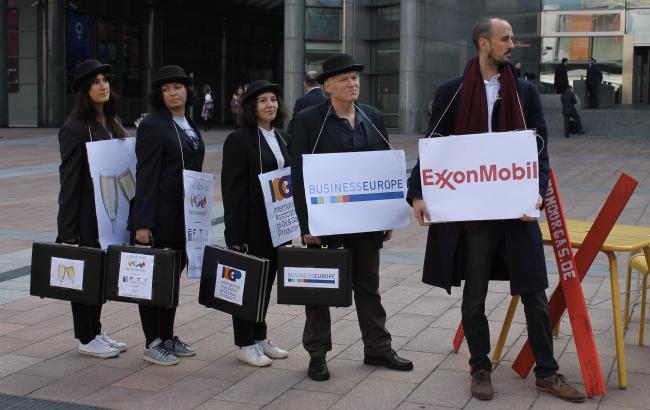
Giving the European Commission a central and dominant role in EU economic governance, without proper democratic control neither at the European nor at the national level, would be a dream-come-true for industry hardliners BusinessEurope, but a disaster for Europe.

BusinessEurope and Economic Governance

Since the outbreak of the crisis, major reforms of the EU's economic governance have been introduced. These reforms are designed to lock in fiscal policy at a national level and enforce austerity at the European level.

Pages


The Brussels Business: Who runs the EU?

Corporate Europe Observatory

Corporate Europe Observatory (CEO) is a research and campaign group working to expose and challenge the privileged access and influence enjoyed by corporations and their lobby groups in EU policy making.

Read more

Creative Commons License
All content on this website is licensed under a Creative Commons Attribution-NonCommercial-ShareAlike 3.0 Unported License.
Corporate Europe Forum